Distributed wind
Evaluate modular vertical-axis configurations at locations with suitable, validated wind resources.
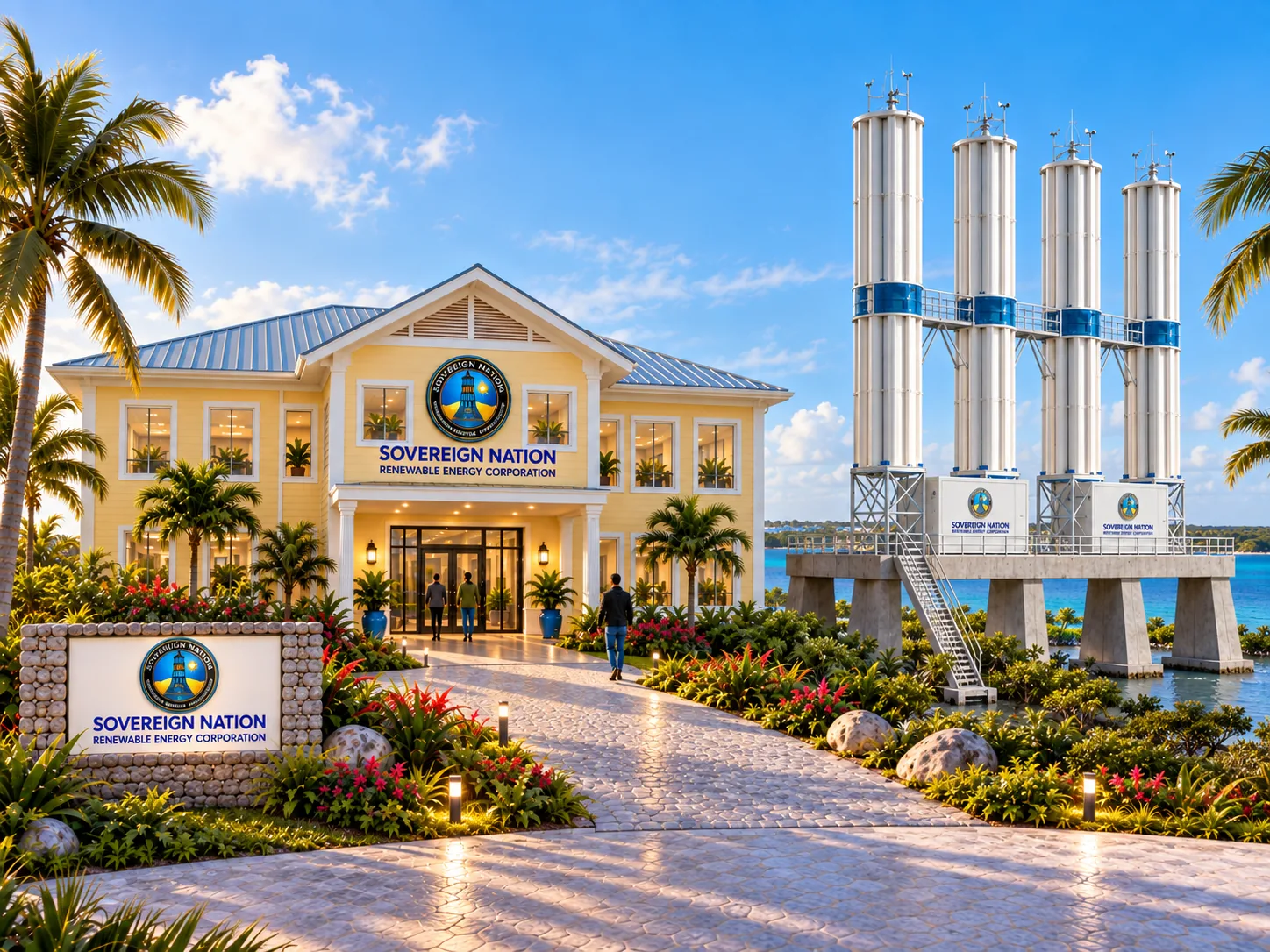
Cleaner energy · Stronger islands · A brighter Bahamas
Renewable-energy and resilient-infrastructure concepts tailored to the realities of The Bahamas.
The Bahamas opportunity
The Bahamas is made up of distinct island electricity systems with different demands, logistics, environmental conditions and resilience needs. A solution that works at one location may not be appropriate at another. SNRE is exploring where distributed renewable generation and storage could complement existing Bahamian electricity infrastructure and support priority operations across New Providence and the Family Islands.
The Bahamas is already advancing energy modernization. SNRE's proposed role is to identify potential renewable-energy and resilience applications, select appropriate site-specific technologies and develop projects through engineering, permitting, stakeholder consultation and commercial review.

Distinct island electricity systems
Sources: Government of The Bahamas, National Energy Policy 2025–2030; figures reported by Bahamas Power and Light (BPL).
SNRE projects are designed to complement—not replace—Bahamas Power and Light (BPL) infrastructure.
About SNRE
SNRE is exploring potential renewable-energy and resilient-infrastructure projects suited to distinct island conditions. Its proposed approach integrates site assessment, renewable generation, storage, controls and long-term operations planning.
Project concepts shown on this website are illustrative unless expressly identified as approved or operating.
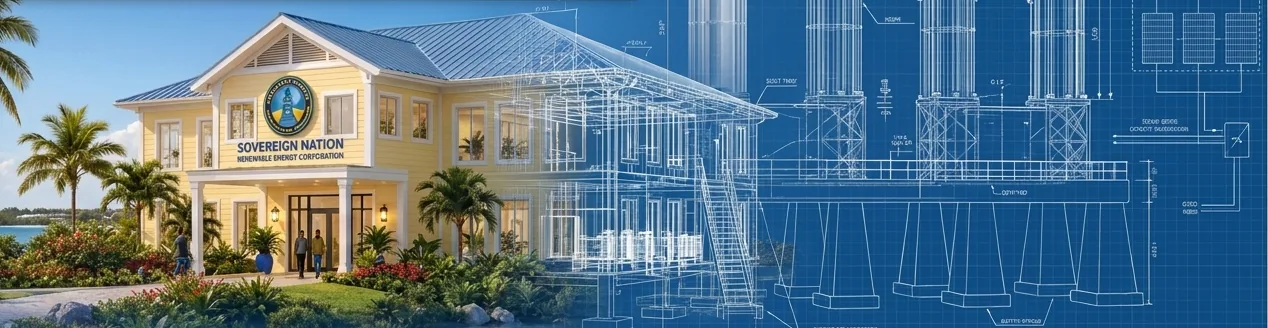
No single generation technology is suitable for every location. SNRE evaluates combinations of complementary resources and supporting infrastructure according to site-specific wind and solar resources, electrical loads, access, operating conditions, utility requirements and engineering feasibility.

Resilient island infrastructure
Evaluate modular vertical-axis configurations at locations with suitable, validated wind resources.
Provide complementary daytime generation on suitable roofs, land and infrastructure.
Support renewable integration, energy shifting, priority loads and defined backup strategies.
Coordinate generation, batteries, utility interface, monitoring, protection and local operating modes.
Consider foundations, enclosures, drainage, communications, access, service and maintenance.
Technology under evaluation
Requires validation
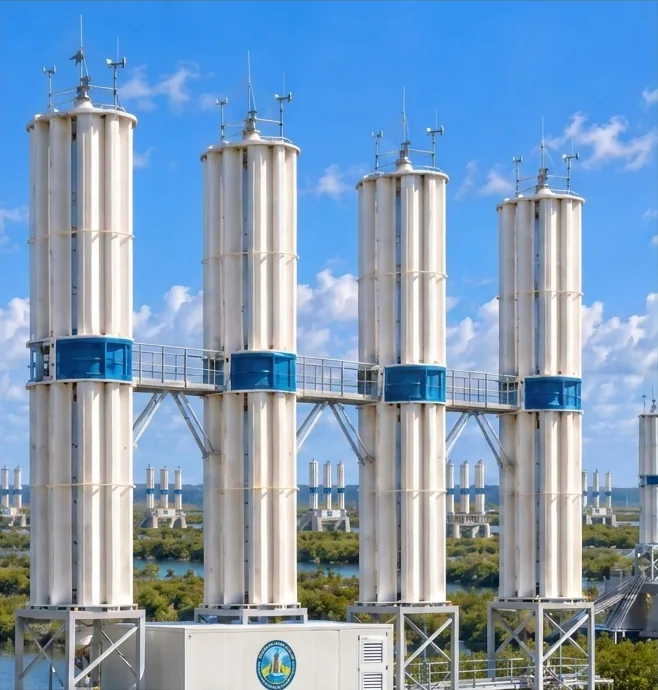
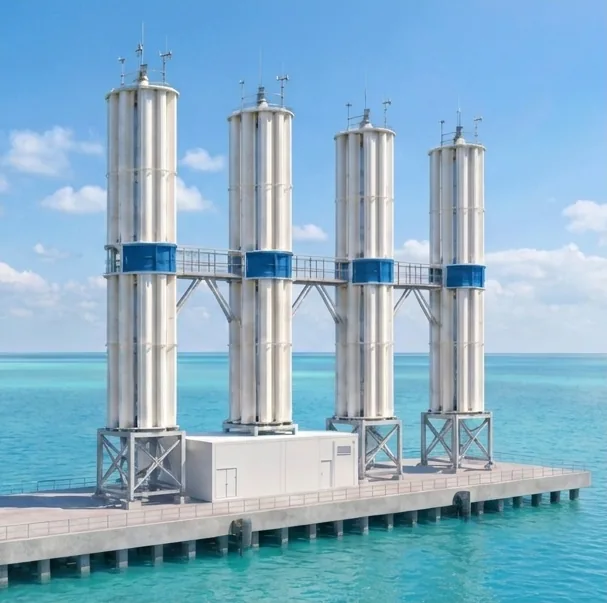
SNRE is evaluating modular vertical-axis wind configurations for distributed-energy applications.
The architecture under consideration may receive wind from changing directions without the conventional yaw mechanism found on propeller-type turbines.
Configurations are evaluated for distributed-energy applications at locations with suitable, validated wind resources.
Technology selection, performance, structural design and site suitability require model-specific testing and independent engineering review.
Solar, storage and controls

SNRE evaluates solar photovoltaic systems and battery energy storage as complementary elements of site-specific renewable-energy concepts. Solar can supply daytime generation; appropriately engineered battery systems may support load management, renewable integration and priority-load resilience.
System size, battery chemistry, storage duration, enclosure safety and operating modes must be determined for each proposed project.
Controls and monitoring can coordinate wind and solar inputs, battery charging, critical-load priorities and interaction with the utility grid where permitted. Local or remote monitoring may help operators observe system condition, respond to alarms and plan maintenance.
Islanded operation and uninterrupted service are possible design objectives, not promises, and depend on the final approved electrical architecture.
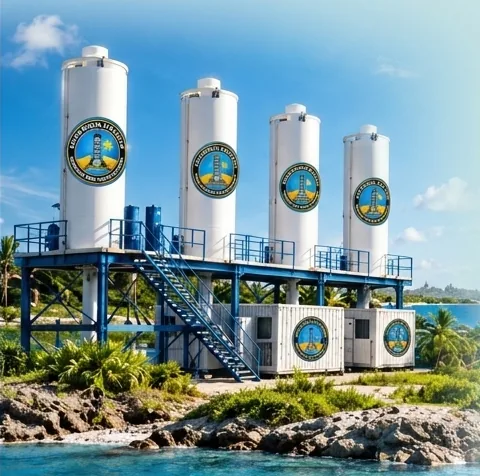
Island energy infrastructure must be planned for more than normal daily conditions. SNRE intends to assess, as appropriate to each site:
Resilience is an engineering and operating discipline—not a claim that equipment cannot fail.
Potential applications
The following are potential applications under evaluation. They are not an announcement of contracted customers, approved sites or operating SNRE projects.
Complementary generation, storage and control strategies for defined operational loads, refrigeration, cooling and selected continuity needs.
Potential support for irrigation, environmental controls, sensors, refrigeration and energy-intensive productive facilities.
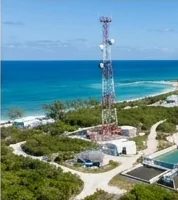
Distributed hybrid power and storage concepts for tower sites, remote equipment and critical communications loads.
Potential renewable energy for pumping, treatment-support loads, monitoring and priority community water infrastructure.
Site-specific wind, solar, storage and control concepts aligned to actual facility load profiles and operating requirements.
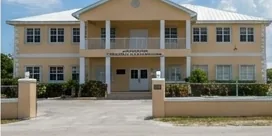
Potential support for designated priority loads, public-serving facilities and local emergency functions.
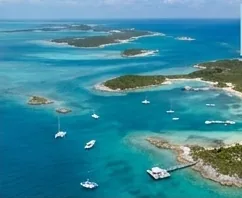
Modular solutions assessed against each island's resources, utility conditions, access, logistics and long-term maintenance capacity.
Potential solar, storage, backup and control concepts supporting defined aviation and transportation loads; wind only where aviation assessment allows.
Airports: Any potential airport concept requires the relevant aerodrome operator's review, civil-aviation obstacle assessment, utility coordination and project-specific engineering and approvals.
Photos: Illustrative sector imagery. Not an SNRE site or customer.
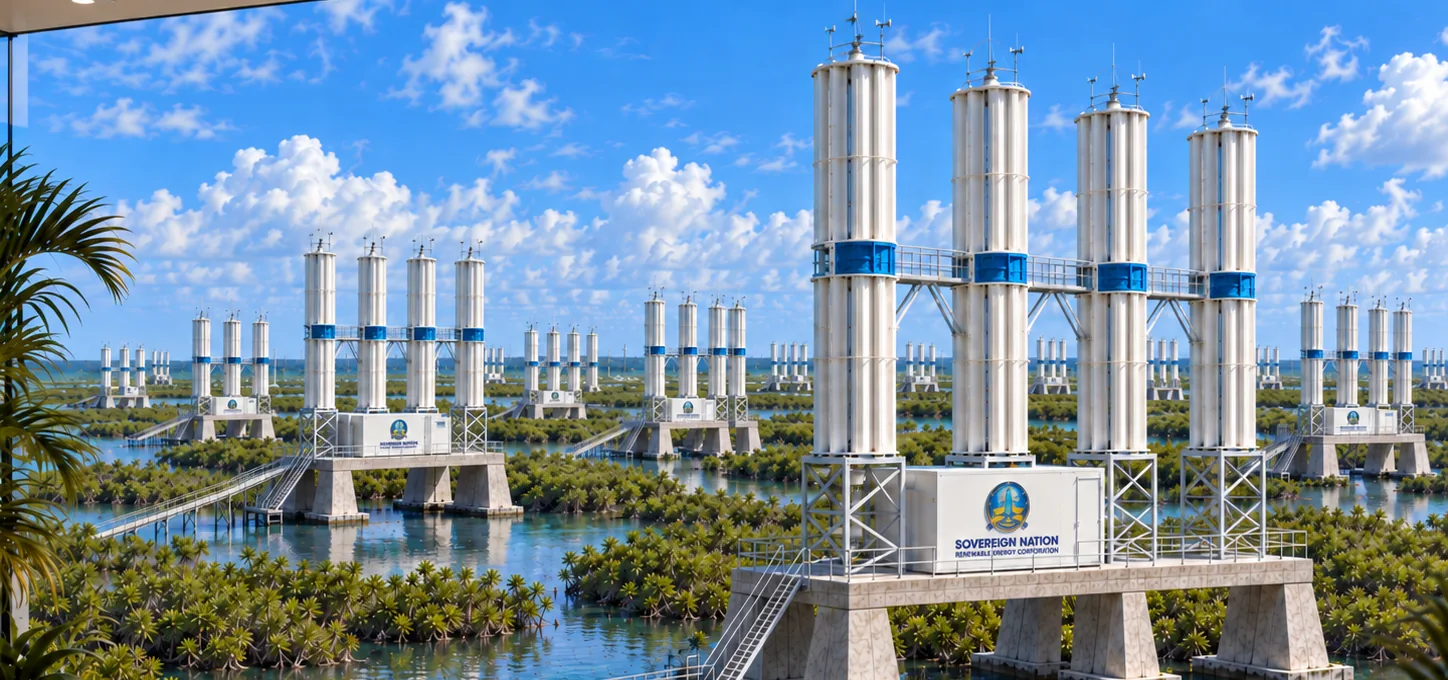
A rendering is not a project. Each one progresses through its own documented decision gates.
Concept image. Illustrative landscape concept. No particular site, land right, deployment density or environmental approval is represented.
Delivery discipline
SNRE's proposed development model progresses through evidence, engineering, permissions and commercial decisions rather than treating a rendering as an approved project.
Identify possible applications, locations, stakeholders and priority electricity loads.
Review load profiles, renewable resources, site access, transport, operating and maintenance needs.
Undertake independent technical and commercial diligence of proposed technology and system configurations.
Develop preliminary layouts, resilience criteria, integration concepts and project-specific engineering options.
Address site control, stakeholder consent, BPL/utility requirements, URCA, environment, aviation where relevant, permits, finance and insurance.
For projects that receive all necessary approvals and authorization: procure, construct, commission, monitor, maintain and improve.
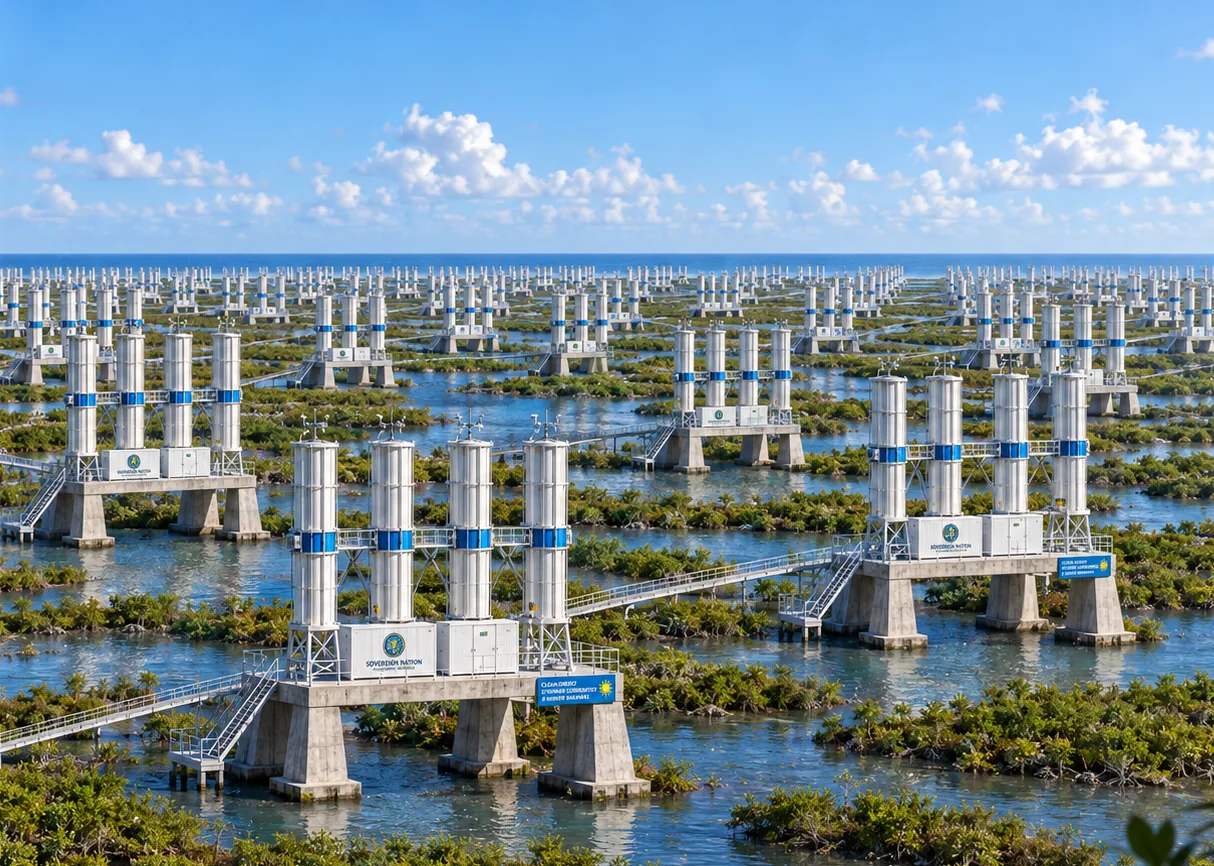
Technology performance, site engineering, safety, operational readiness and commercial arrangements are independent review requirements. They must not be represented as completed simply because they appear in a diagram or concept image.
Validating wind and solar potential at exact site elevations prior to yield forecasting.
Requiring certified extreme-wind and fatigue analysis for all structural elements and foundations.
Conducting interconnection studies, protection reviews and regulatory licensing via URCA.
Adhering to DEPP screening procedures for coastal, wetland and community impact.
Potential deployments may require environmental screening, land-use review, drainage and coastal assessments, utility studies, licensing, building and electrical approvals, and consideration of Bahamian engineering, installation, local procurement, training and operations capabilities.
Governance
Sovereign Nation
Renewable Energy Corp.
The Bahamas
SNRE's management and authorized advisers are responsible for guiding proposed opportunities through appropriate technical, commercial, environmental, regulatory and stakeholder review.
SNRE is exploring renewable-energy and resilient-infrastructure applications in The Bahamas. Concept images illustrate potential configurations and sectors, not completed installations or approvals. Specific project locations, counterparties, financing, construction schedules and deployment quantities are not announced on this initial site.
Contact
SNRE welcomes discussions with utilities, infrastructure owners, commercial organizations, public-serving institutions, technical specialists and Bahamian communities regarding potential renewable-energy and resilience applications.
“Building a more resilient energy future requires the right sites, the right technology and the right development approach.”